“GOP is already deep in the stages of grief as midterm losses loom”, Emily Singer, Daily Kos.
What is the article about?
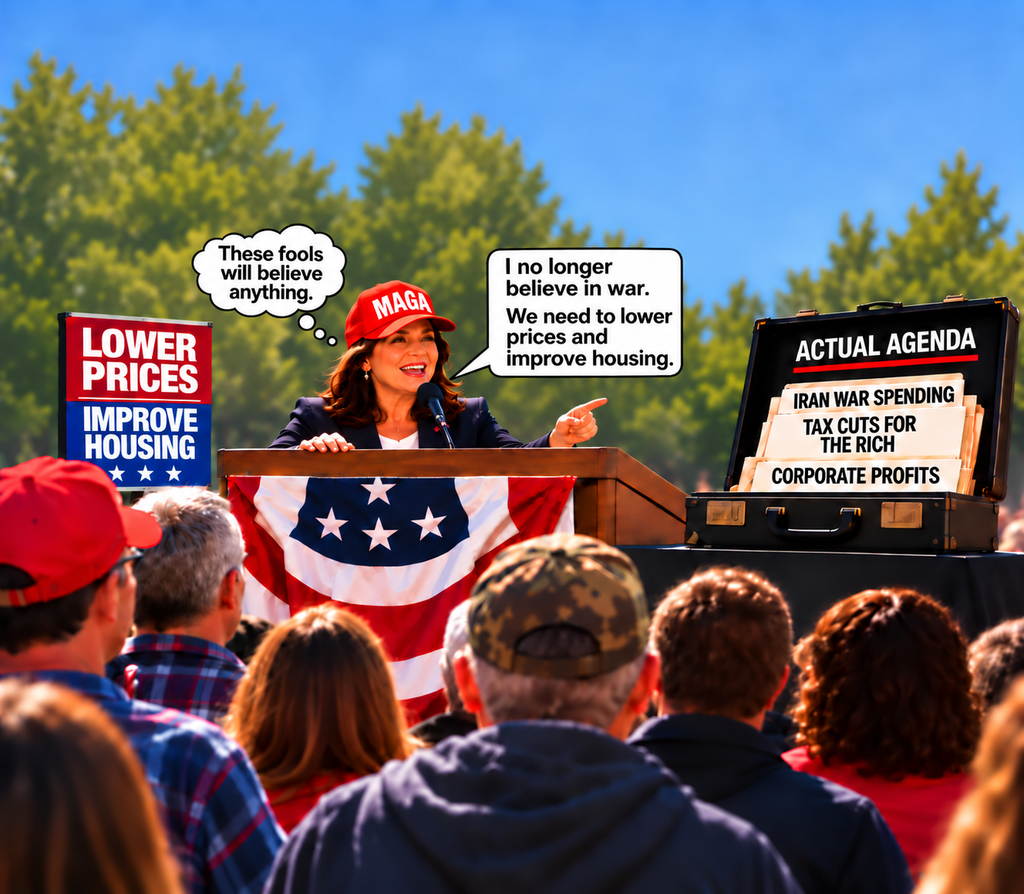
“GOP is already deep in the stages of grief as midterm losses loom”, examines Republican anxiety over the 2026 midterms as unfavorable polling, weak presidential approval, and mounting cost-of-living concerns reshape campaign behavior. The article highlights that Republican candidates are distancing themselves from previously supported policies, redirecting money, revising messages, and defending territory that once seemed secure. Singer argues that the important signal is not political rhetoric alone, but tactical adaptation. Republicans have not necessarily abandoned Trump – partisan loyalty remains substantial. However, dissatisfaction with his economic performance is increasingly penetrating his own political coalition.
The article also reveals that the deeper issue is ordinary people’s daily purchasing power—whether wages keep pace with groceries, housing, fuel, healthcare, and other necessities. The article therefore invites readers to look beyond apparent repositioning and ask whether politicians’ underlying commitments and campaign strategy have truly changed. Its larger significance lies in identifying a key trend line: the 2026 midterms is one of the most important in decades and will be determined by Americans’ pocketbooks, material security, and judgments about who bears responsibility.
Why should you read it?
Can a leopard change its spots?
The midterm elections will help determine the direction of the nation over the next two years. They are too important for anyone to be a bystander. But being an active participant means more than voting. You need to know the issues, understand what is at stake, and watch carefully how politicians change the message when confronted by voters pushing back.
Emily Singer poses this question in her article.
As Republicans confront growing voter anxiety over the economy and the war in Iran, some are jumping off the Trump Bandwagon, and changing their rhetoric. They are backing away from support for the war and suddenly talking about gas prices, household expenses, and economic relief. Have these Republicans changed their viewpoints, or is electoral pressures forcing them to confront the bread-and-butter concerns of voters.
But can a leopard really change its spots?
Have these politicians changed their priorities—or have they changed their message because an election is approaching? Do they now believe that the cost of living should take priority over an expensive war abroad? And when the election is over, will they continue emphasizing the bread-and-butter issues affecting working families? Or will they go back to their war-making ways?
Republican voters must also look in the mirror. Will they put ideology over their economic needs? Will they decide that being a MEGANITE is more important to them than lower food prices, gasoline prices, and a higher quality of life?
That is what makes this article worth reading. Don’t just listen to what politicians say when they need your vote. Compare what they are saying now with what they have actually done. Then decide for yourself whether the leopard has really changed its spots.
Reaction
As the midterm elections approach, some Republicans are suddenly talking more about gasoline prices, groceries, household expenses, and the economic pressures squeezing working families. But voters should not confuse a change in campaign rhetoric with a change in political priorities. A leopard does not change its spots simply because an election is approaching.
Political accountability should therefore be measured by whether government decisions improve people’s lives. Culture-war politics may mobilize voters, but it does not lower rent, grocery bills, or healthcare costs. Voting should not distract from the cost of living. Working families need relief, economic security, and policies that address the pressures they face every day.
The real question is not whether politicians have changed their message. It is whether they have changed whose interests they are willing to fight for.
This is why voters must look beyond campaign speeches. Political accountability begins by comparing what politicians say with what they have done, whose interests they have protected, and whose lives have actually improved under their policies.
That should be one of the central tests of the 2026 midterm elections. Do not judge politicians by what they suddenly say when they are afraid of losing an election. Judge them by what they have done – and whether they have really improved people’s lives.
So, can a leopard change its spots? Perhaps. But voters should demand evidence before believing that it has.
Author Profile

Latest entries
 Political Elections10/08/2026“GOP is already deep in the stages of grief as midterm losses loom”, Emily Singer, Daily Kos.
 War09/16/2026“No good options: Trump insiders reveal crisis that ‘thwarted’ the GOP”, Nick Hilden, AlterNet.
 Labor Rights08/24/2026Socialists’ Winning Streak Is an Opportunity for Unions
 Political Elections08/21/2026Abdul El-Sayed Beats the Democratic Establishment and AIPAC in Michigan