Juneteenth, Black Freedom and the Great Betrayal
Henry-Louis Taylor, Jr.
UB Center for Urban Studies, University at Buffalo
June 18, 2026
Understanding Juneteenth in the Black imaginary requires placing the slave industry in a historical context anchored by five realities. The first is that slavery and the production of cotton were essential features of the early formation racial capitalism in the United States.
The second reality poses the question: “If slavery was so evil, then why did it last so long?” Planters called cotton “King Cotton” because of the enormous profits it generated. Cotton was the raw material that fueled the textile industry and catalyzed the Industrial Revolution. Without cotton and slavery, the United States, as we know it, would not exist.
The third reality is that slave trading and the making of a slave was a brutal and inhumane process. Between two and six million Africans died during the horrific journey from Africa to the Americas, confined in the holds of slave ships. Then, enslavers attempted to erase their history, religion, cosmology, language, and even their names—renaming them after their owners.
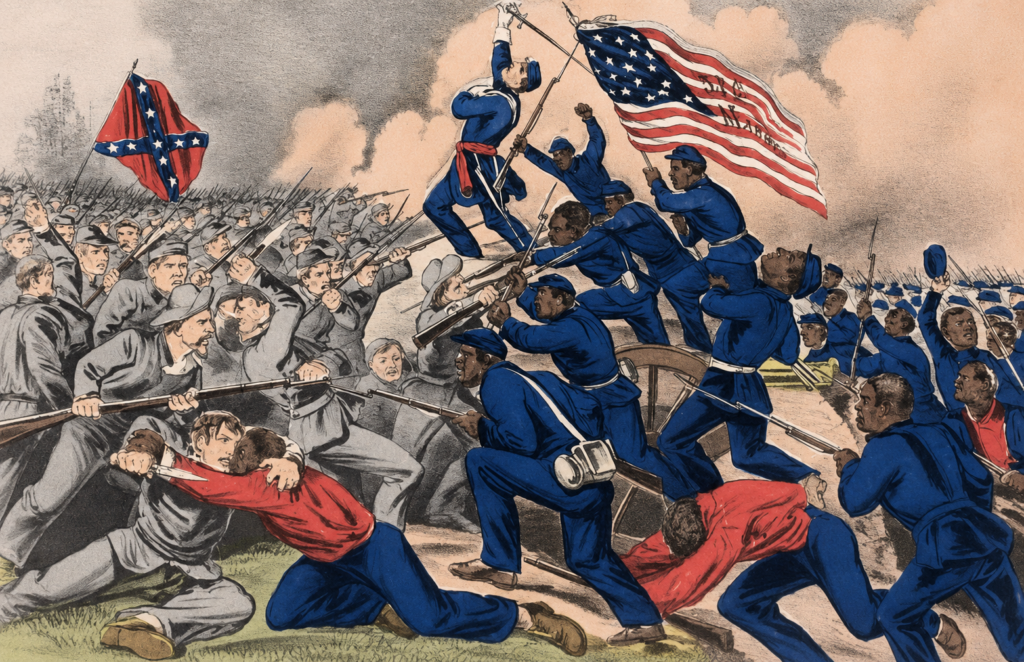
The fourth reality is that approximately 200,000 African Americans fought for their freedom during the Civil War, with about 40,000 dying and 25 receiving the Congressional Medal of Honor. Black soldiers were American patriots whose bravery on the battlefields, combined with resistance and insurrections on plantations, helped turn the tide and secure victory for the North over the South.
The Civil War was the bloodiest conflict in United States history. More than 620,000 people died—more than all other American wars combined at that time. The Union Army could not have achieved victory without Black soldiers.
This brings us to the fifth reality—the Great Betrayal. Confederate leaders attempted to destroy the United States and launched a devastating war that killed hundreds of thousands. Yet, when the conflict ended, the U.S. government left Black patriots poor, landless, and powerless by returning land, wealth, and political power to former Confederates.
The United States then allowed former Confederates to establish a new system of oppression and exploitation based on debt peonage, sharecropping, and tenant farming.
They were also permitted to develop a brutal system of racial control that included chain gangs and extra-legal violence, including lynching and Ku Klux Klan terrorism.
Thus, the contemporary challenges facing African Americans do not stem from slavery. They are rooted in the Great Betrayal and the continued existence of racial capitalism. This economic system demanded that the land, resources, and labor of Blacks, and other people of color to produce profits and accumulate wealth. Racial capitalism required the creation of a racial hierarchy and the exploitation and oppression of Blacks and other people of color.
Racial capitalism created slavery, debt peonage, and the continued exploitation and oppression of Blacks. In this context, slavery was just the starting point in this long road of subjugation and exploitation.
This brings us back to Juneteenth.
Lincoln signed the Emancipation Proclamation on January 1, 1863, which declared enslaved people in the Confederate states to be free, although slavery continued in some areas until later constitutional abolition. However, news and enforcement moved slowly in the Trans-Mississippi region, and enslaved Black people in Texas remained in bondage.
Meanwhile, the war continued for more than two years. On April 9, 1865, General Robert E. Lee surrendered to General Ulysses S. Grant at Appomattox, Virginia, effectively ending the Civil War.
However, some Confederate forces continued fighting, and Major General Gordon Granger did not reach Galveston, Texas, until June 19, 1865. There he issued General Order Number 3, announcing that enslaved people were free: the slave system had been abolished, and generations of bondage were ending.
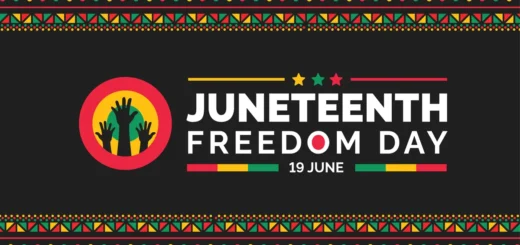
That day established the basis for the holiday known as Juneteenth—”June” plus “nineteenth.”
On Juneteenth, we celebrate the ending of slavery, remember the Great Betrayal, and rededicate ourselves to the continuing struggle “to get free.”
Author Profile