
Black Studies in the Era of White Supremacy and Authoritarianism: A Conversation at Princeton
On Friday, February 27, 2026, the Department of African American Studies at Princeton University convened a one-day symposium titled “Black Studies Is For Everyone.” Held on Princeton’s campus, the gathering brought together leading scholars in the field along with community members from across the eastern seaboard—from Philadelphia to New York City.
The symposium focused on a conversation — among the scholars and between the scholars and participants — resulting in a rich exchange of ideas, interpretations, and viewpoints.
Rather than a series of isolated presentations, the symposium created an intellectual common that centered a dialogue on the significance of Black Studies and the challenges it faces in this age of authoritarianism.
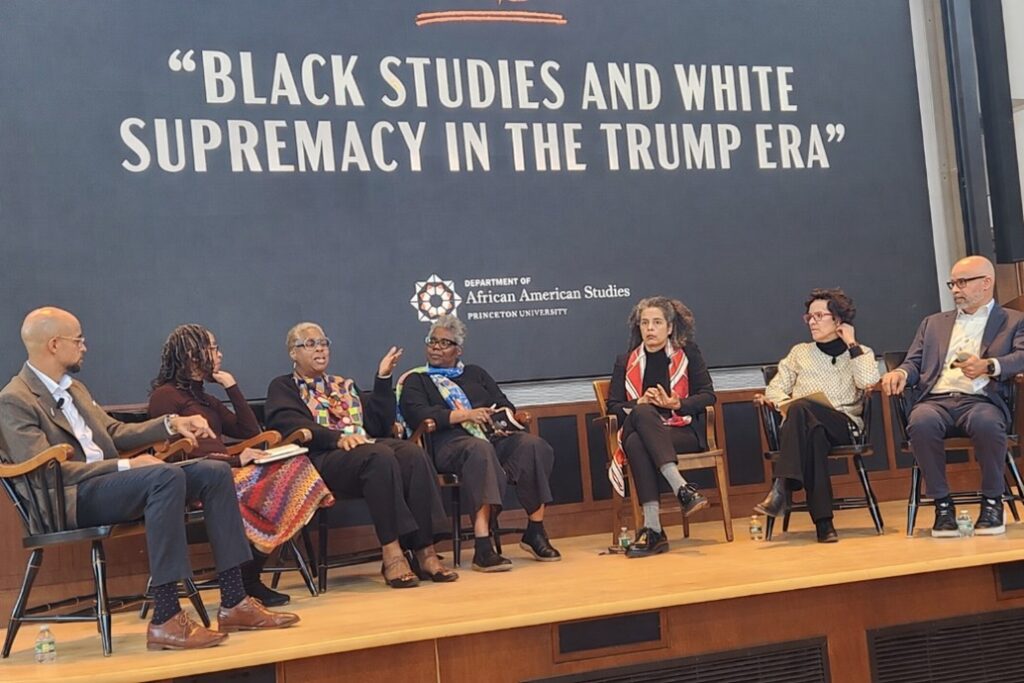
The conversation was organized around three panels: Black Studies and White Supremacy in the Trump Era; Black Art and Letters in a Time of Crisis; and The Meaning of Racism after Critical Race Theory and DEI.
The discipline of Black Studies plays a vital role in the academy because it explains the structural positionality of Black people in the United States, interrogates the failure of liberal democracy to fully incorporate them into the body politic, and exposes U.S. capitalism as racial capitalism—an economic system that depends on inequality and racial hierarchy to generate profit and accumulate wealth.
Black Studies strips away national fantasies and, as Princeton’s Naomi Murakawa observed, “forces people to get a grip on reality.” Black Studies also explores the beauty of Black life as a social and cultural force in the USA and how Black people’s actions influence life and culture in the USA.
Against this backdrop, four critical takeaways emerged:
First, Black Studies is under severe national attack, particularly in the South, and within universities, reactionary forces are being empowered to undermine them. One of the core strategies is deploying multiple forces to reduce enrollment in Black Studies courses.
Second, resisting Trump and the broader authoritarian movement requires developing strategies to prevent universities from assaulting Black Studies and other progressive activities on campus, while sustaining their connections with communities of color and residents in underdeveloped communities. The danger is coming from the enemy within.
Third, Black Studies should unite with community groups to fight for the inclusion of Black Studies in K-12th grade. This knowledge is essential for the development of our children.
Lastly, the “truth” is losing in the fight against Trump and the authoritarian movement. The authoritarian movement is replacing reality with “lies agreed upon.”
The victory in Minneapolis was significant, but this fight against authoritarianism is far from over. Authoritarianism is not some storm that will pass over. It is a movement that must be defeated.
A one-day symposium will always leave many questions unanswered, but starting these conversations among scholars and between scholars and the people is an example that all universities should follow in this age of authoritarianism.
Going forward, these types of gatherings should include conversations on Black futures in a United States where White Supremacy and Racial Capitalism have been abolished? What would such a nation look like and how do we build it?
March 2, 2026
By Henry-Louis Taylor
Author Profile

Latest entries
 Border Security06/25/2026Trump Holds Housing Affordability Bill Hostage To Pressure Congress On Elections
 Housing Conditions06/22/2026Will the World Cup Fuel Arrests of Homeless People in Atlanta?
 Buffalo East Side History Project06/22/2026The Editorial Board: Broadway-Fillmore residents will take the reins on neighborhood transformation
 Black Studies06/18/2026Juneteenth, Black Freedom and the Great Betrayal