The Editorial Board: Broadway-Fillmore residents will take the reins on neighborhood transformation
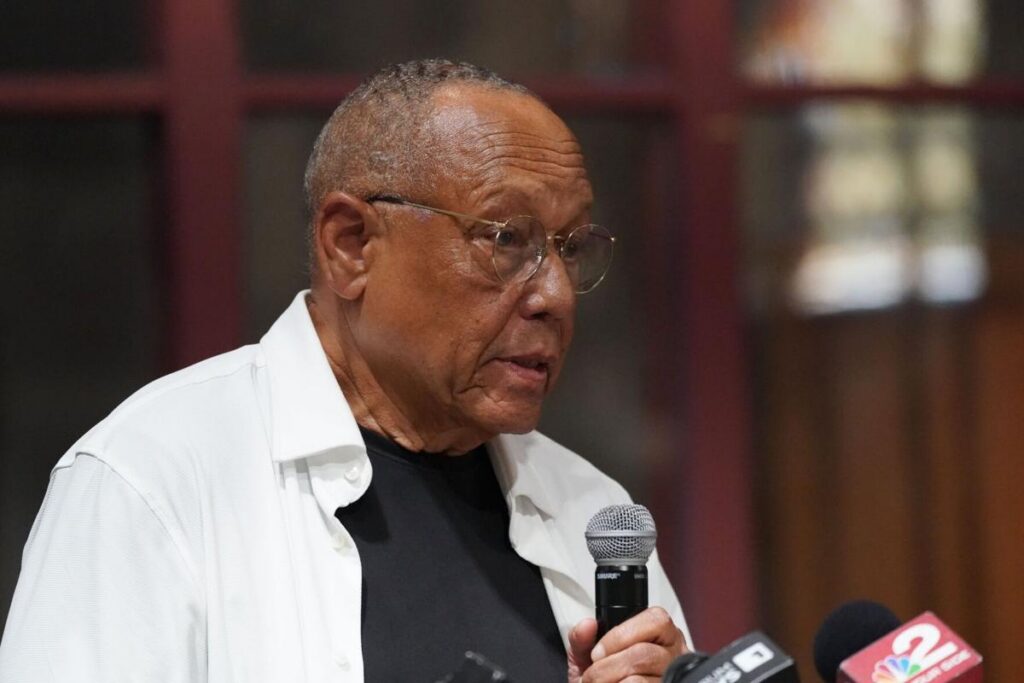
Development that renews neighborhoods from the ground up is about to take its first steps. There is reason to hope an innovative form of community building will soon be transforming part of Broadway-Fillmore. If successful, it will be applied to other parts of the city.
This concept, known as the Upper Broadway-Fillmore Transformation Project, has up until now existed solely on paper and as the subject of meetings and presentations, but a two-year, $3 million grant from the Mother Cabrini Health Foundation – announced Thursday – will provide enough funding for the project to hire a core team, establish a resident-led Neighborhood Council, launch a communitywide planning process and even fix up a few neighborhood homes.
As reported by The News’ Jon Harris, the experiment will be tried out in real time in a real place: U.S. Census Tract 166, a roughly half-mile grid of streets near such East Side landmarks as MLK Park, the Broadway Market and Central Terminal. The grid is bounded by Jefferson Avenue, Genesee Street, Best Street, Fillmore Avenue and Broadway. As the project moves ahead, it’s thought that more funders will come forward.
It’s likely that other foundations will see what Mother Cabrini saw: a process that rejects the top-down approach and invites community members to the table to decide for themselves how they want to make their neighborhood better. As Daniel Frascella, chief programs and grants officer at Mother Cabrini, noted, “It’s the community itself coming together, led by people who have demonstrated a commitment to this community for decades, and that’s unusual to see on this level, but also quite inspiring for the foundation.”
There are many reasons this is worth trying. The main one is that Buffalo’s East Side has been assessed by the numbers and the sad fact is that things are not getting better. At best, there is stagnation.
Henry-Louis Taylor Jr., founding director of the University at Buffalo’s Center for Urban Studies at the School of Architecture and Planning, and his team of researchers compiled two separate reports, in 1990 and 2021. The stories these studies tell are chilling and depressingly familiar. Between those two dates, three decades apart, research found that the average household income for Black residents moved from $39,000 to just $42,000. Home ownership rates actually went down from 33% in 1990 to 32% in 2020, while the poverty rate inched slightly downward from around 38% to 35%.
The needle essentially didn’t move. And, as many residents and observers have reported, investments made after the horrific racist massacre that killed 10 Black people on May 14, 2022, have failed to make a significant difference.
To read the full article, go to The Buffalo News
By The Buffalo News On June 17, 2026
Author Profile

Latest entries
 Labor Rights08/24/2026Socialists’ Winning Streak Is an Opportunity for Unions
 Political Elections08/21/2026Abdul El-Sayed Beats the Democratic Establishment and AIPAC in Michigan
 Democratic Socialism08/14/2026No, AOC: “Woke” Wasn’t “Crazy” the Way You Say It Was
 Political Elections08/13/2026The Socialist Electoral Project Still Hasn’t Hit Its Ceiling